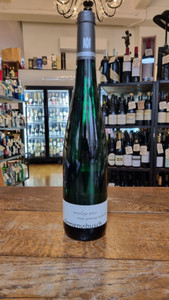

Clemensbusch - vom Blauen Schiefer Riesling 2023
NZD$63.00
(No reviews yet)

Write a Review
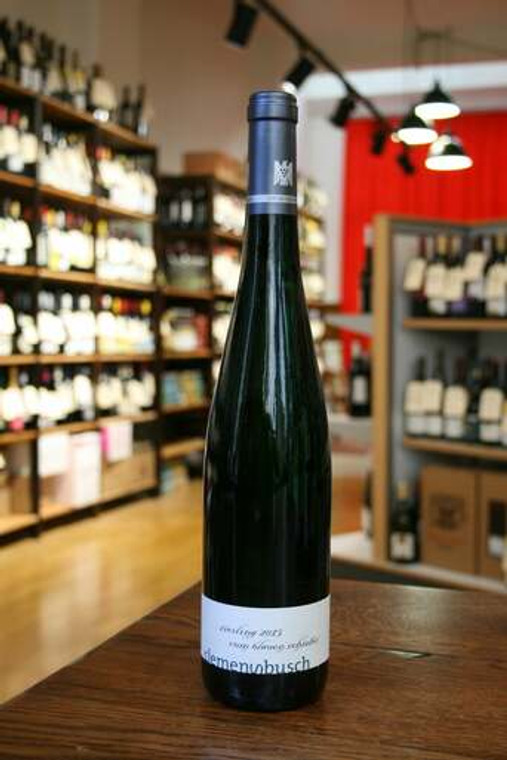
Clemensbusch - vom Blauen Schiefer Riesling 2023
Fresh apple and cherry are wreathed in thyme on the nose, then come to the palate with a silky impression of lees inflection as well as generous juiciness. Seed and pit piquancy, floral and herbal pungency and a kiss of wet stone serve for delightful counterpoint on a lusciously lingering finish."
--------THE PRODUCER--------
Clemens Busch
As a young winemaker in the 70s, organic and biodynamic pioneer Clemens Busch was already questioning the use of herbicides and reducing the sulphur levels in his wines. When he and wife Rita inherited his parents’ winery and vineyards in 1984, they had the chance to put these ideas into practice.
Most of their production comes from the Pündericher Marienburg, a south-west-facing hillside vineyard in the Lower Mosel. They inherited two hectares, but have bought adjoining plots and now own 16 of the 25 hectares which make up the Marienburg einzellage.
Geology along the Mosel is complex, and the winding river provides sites with varied exposures. Clemens still vinifies and bottles each plot separately: he produces Vom Grauen Schiefer (from grey slate) and Vom Roten Schiefer (from red slate). The Rothenpfad plot is all red slate, which is unusual in the Mosel, while Farhlay is dominated by blue slate. Falkenlay, located between the two, and considered by some to be the finest site within Marienburg, is predominantly grey slate, and provides grapes for their noble sweet wines.
In the winery Clemens works with wild yeasts, and ferments mostly in very old 1000-litre barrels. Nothing is added to the wines at any stage, apart from a touch of sulphur at bottling. Charming and self-effacing, Clemens' winemaking is honest and refined, producing wines that are pure expressions of their terroir.
--------THE GRAPE--------
Riesling
Riesling is a white grape variety which originated in the Rhein region in Germany. Riesling is an aromatic grape variety displaying flowery, almost perfumed, aromas as well as high acidity. It is used to make dry, semi-sweet, sweet, and sparkling white wines. Riesling wines are usually varietally pure and are seldom oaked. As of 2004, Riesling was estimated to be the world's 20th most grown variety at 48,700 hectares, but in terms of importance for quality wines, it is usually included in the "top three" white wine varieties together with chardonnay and sauvignon blanc. Riesling is a variety which is highly "terroir-expressive", meaning that the character of Riesling wines is greatly influenced by the wine's place of origin.
In cool climates (such as many German wine regions), Riesling wines tend to exhibit apple and tree fruit notes with noticeable levels of acidity that are sometimes balanced with residual sugar. A late-ripening variety that can develop more citrus and peach notes is grown in warmer climates (such as Alsaçe and parts of Austria). In Australia, Riesling is often noted for a characteristic lime note that tends to emerge in examples from the Clare Valley and Eden Valley in South Australia. Riesling's naturally high acidity and pronounced fruit flavours give wines made from the grape exceptional ageing potential, with well-made examples from favourable vintages often developing smokey, honey notes, and aged German Rieslings, in particular, taking on a "kerosene" character.
--------THE REGION--------
Mosel
Mosel is the most famous of Germany's 13 official wine regions, and also the third largest in terms of production. As with many German regions, it is most associated with a range of wine styles made from the riesling grape variety.
The best Mosel Riesling wines are some of the finest whites in the world. Light and low in alcohol, they can be intensely fragrant with beguiling floral and mineral notes, and a wonderful balance of sweetness and acidity.
The region follows the path of the Mosel river from its confluence with the Rhine river near Koblenz, upstream and south-west to Germany's border with Luxembourg and France. This region also includes the Saar and Ruwer tributaries, and was formerly known as Mosel-Saar-Ruwer until August 2007, when the name was officially shortened to Mosel.
Some of the famous wine villages along the valley include Bernkastel, Brauneberg, Erden, Graach and Piesport, to name but five. Furthermore, the region boasts some of the finest and most picturesque vineyards in Europe.
The Romans planted the first vineyards along the Mosel river and the city of Trier around the second century. Today, this region is known for its steep slopes overlooking the rivers, on which the vineyards are planted.
Bremmer Calmont, located in the town of Bremm, has an incline of up to 68°. It has often been cited as the steepest vineyard site in the world, though the Engelsfelden vineyard in the Bühler Valley (Bühlertal) in the Baden region is documented at 75°.
The Mosel has a very cool, northern continental climate, and such slopes are very effective in optimizing the vines' exposure to sun, facilitating the ripening of the grapes. The best sites also take advantage of the solar radiation reflecting off the rivers' surface and onto the vines, and the dark slate soil's ability to absorb heat during the day and radiate it back to the vines at night.
In summer the weather is warm, but certainly not hot, with an average July temperature of around 18ºC. A long growing season helps develop the intense flavours in the Riesling grapes while keeping potential alcohol levels low.
Related Products
-
-
Forrest Riesling - 2023/25
NZD$32.00 -
-


