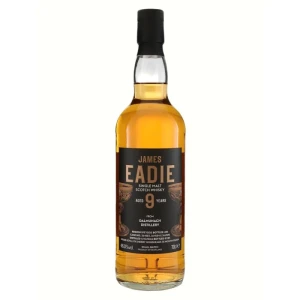
James Eadie - Dalmunach 9yo 48% 700ml
NZD$115.00

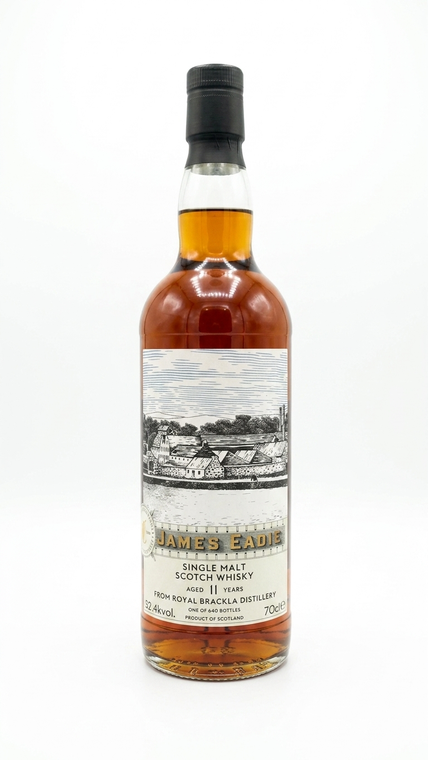
Nose: Baked apple, vanilla cream, shortbread and gentle spice.
Palate: Buttery malt, toffee apple, apricot and toasted oak.
Finish: Clean and elegant with soft fruit and sweet malt.
"Royal Brackla's story began in 1812 with Captain William Fraser, becoming the first Scotch whisky to earn a Royal Warrant from King William IV in 1833, earning the nickname "The King's Own Whisky" and establishing a legacy of regal quality. Though mostly used for blends for decades, famously for Dewar's, the distillery (now owned by Bacardi) saw a major push as a single malt starting in 2015 with a core range (12, 16, 21 Year Olds) focused on rich, sherry-cask maturation, showcasing its opulent, fruity character for a new audience."
ABOUT THE PRODUCER:
James Eadie was born into a family of brewers and blenders. So when the famed whisky critic Alfred Barnard visited him in 1889, it was no surprise that they bonded over a dram.
The whisky in question was James Eadie’s family blend. Passed down by his father, it was known as James Eadie’s Trade Mark X from 1877, when it was registered as one of the world’s first brands.
For decades thereafter, James Eadie’s whisky captivated contemporaries. Barnard himself lavished praise on this “ancient Scotch mixture”, of which Mr. Eadie was declared the “fortunate possessor”. Yet like many great names of the Victorian era, it did not survive into the 21st Century.
Last bottled in the 1940s, the components of the blend were unknown until Rupert Patrick, James Eadie’s great-great-grandson, made the chance discovery of his 19th-century ledgers. These records laid bare the spirits that were used to make his family’s celebrated Scotch. Pieced together, they revealed a forgotten blend from a distant era, in which the diverse flavours of every whisky-producing region of Scotland were expertly combined.
Two centuries on, using only whiskies from distilleries which James Eadie himself had purchased from, Norman Mathison, one of Scotland’s finest Master Blenders, was entrusted to revive this ancient Scotch. And so, after a lengthy slumber, James Eadie’s whisky was brought back to life.